
Persons
Academic Staff
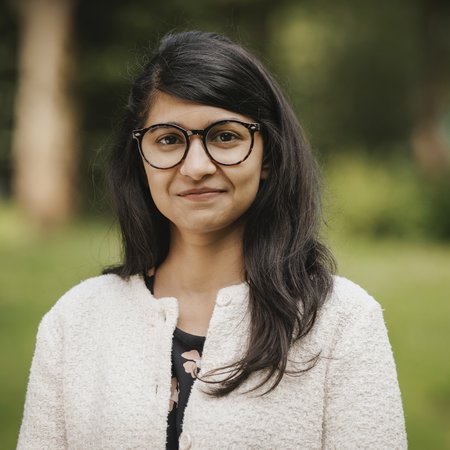
Mahnoor Shahid, M.Sc.
- Room:
- R09 R04 H41
- Phone:
- +49 201 18-33126
- Email:
- mahnoor.shahid (at) ris.uni-due.de
- Consultation Hour:
- Thursdays 12:00-14:00
- Author Profiles:
- ORCID
- Google Scholar
- ResearchGate
- Social Media:
- GitHub
- Address:
- Chair of Sustainability and Innovation in Digital Ecosystems
Rhine-Ruhr Institute of Information Systems
Faculty of Computer Science
University of Duisburg-Essen
Universitätsstraße 9
45151 Essen
Bio:
Mahnoor Shahid is a PhD candidate, specializing in Neuro Symbolic AI, focused on developing the Next-Gen AI that reasons with common sense and understanding.
Her academic journey began with a Bachelor's degree in Computer Science from N.E.D University, Pakistan. She then pursued a Master's in Data Science and Artificial Intelligence at Saarland University, Germany.
Mahnoor has a strong background in software development, data analytics, and digital transformation, with 3 years of experience. She further honed her research skills by working as a Research Assistant at DFKI, the German Research Center for Artificial Intelligence, for 2 years. Currently, she is part of the Chair of Information Systems and Sustainable Supply Chain Management, where she is involved in AI/ML related projects.
Her research interests extend beyond specific applications. She previously conducted research in the fields of Natural Language Processing, Language Models, and Energy Disaggregation, under the umbrella of Transfer Learning and Domain Adaptation to understand and investigate the problem of generalization in machine learning. Additionally, she has sparked an interest in Machine Learning Privacy, a critical area for ensuring responsible AI development.
Her current research revolves around enabling common sense reasoning within AI systems by tackling the symbol grounding problem with neuro-symbolic AI, aiming to create explainable, adaptable, and compositional AI architectures.
Curriculum Vitae:
Academic
2020-2023 Saarland University, Germany
Masters Degree in Data Science and Artificial Intelligence
2014-2017 NED University, Pakistan
Bachelors Degree in Computer Science
Work Experience
Since 2023 University of Duisburg-Essen
2021-2023 Deutsches Forschungszentrum für Künstliche Intelligenz (DFKI)
Research Assistant at the Department of Agents and Simulated Reality (Prof. Dr.-Ing. Philipp Slusallek)
2020 Pakistan Automation
Digital Transformation Manager
2020 Sybrid Private Limited - A Lakson Group of Company
Data Analyst
2018 - 2020 Techlogix Pvt. Ltd.
Software Developer
Fields of Research:
- Generativity, Generalization, and Generative AI
- Neuro Symbolic AI
- Symbol Grounding
- Natural Language Processing and Language Models
- Compositional Generalization
- Domain Adaptation
- Machine Learning Privacy
Publications:
- Shahid, Mahnoor; Rothe, Hannes: AGEL-Comp: A Neuro-Symbolic Framework for Compositional Generalization in Interactive Agents. In: IntelliSys 2026. Amsterdam, 2026. doi:10.48550/arXiv.2604.26522Abstract Details Full textCitation
Large Language Model (LLM)-based agents exhibit systemic failures in compositional generalization, limiting their robustness in interactive environments. This work introduces AGEL-Comp, a neuro-symbolic AI agent architecture designed to address this challenge by grounding actions of the agent. AGEL-Comp integrates three core innovations: (1) a dynamic Causal Program Graph (CPG) as a world model, representing procedural and causal knowledge as a directed hypergraph; (2) an Inductive Logic Programming (ILP) engine that synthesizes new Horn clauses from experiential feedback, grounding symbolic knowledge through interaction; and (3) a hybrid reasoning core where an LLM proposes a set of candidate sub-goals that are verified for logical consistency by a Neural Theorem Prover (NTP). Together, these components operationalize a deduction--abduction learning cycle: enabling the agent to deduce plans and abductively expand its symbolic world model, while a neural adaptation phase keeps its reasoning engine aligned with new knowledge. We propose an evaluation protocol within the \texttt{Retro Quest} simulation environment to probe for compositional generalization scenarios to evaluate our AGEL agent. Our findings clearly indicate the better performance of our AGEL model over pure LLM-based models. Our framework presents a principled path toward agents that build an explicit, interpretable, and compositionally structured understanding of their world.
- Shahid, Mahnoor; Rothe, Hannes: Grounding vs. Compositionality: On the Non-Complementarity of Reasoning in Neuro-Symbolic Systems. In: AAAI MAKE 2026. San Francisco, 2026. doi:10.48550/arXiv.2604.26521Abstract Details Full textCitation
Compositional generalization remains a foundational weakness of modern neural networks, limiting their robustness and applicability in domains requiring out-of-distribution reasoning. A central, yet unverified, assumption in neuro-symbolic AI is that compositional reasoning will emerge as a byproduct of successful symbol grounding. This work presents the first systematic empirical analysis to challenge this assumption by disentangling the contributions of grounding and reasoning. To operationalize this investigation, we introduce the Iterative Logic Tensor Network (LTN), a fully differentiable architecture designed for multi-step deduction. Using a formal taxonomy of generalization -- probing for novel entities, unseen relations, and complex rule compositions -- we demonstrate that a model trained solely on a grounding objective fails to generalize. In contrast, our full LTN, trained jointly on perceptual grounding and multi-step reasoning, achieves high zero-shot accuracy across all tasks. Our findings provide conclusive evidence that symbol grounding, while necessary, is insufficient for generalization, establishing that reasoning is not an emergent property but a distinct capability that requires an explicit learning objective.
- Zebhauser, Jonathan; Shahid, Mahnoor; Rothe, Hannes: Uncovering Inverse Generativity: An Exploratory Prompt Analysis in LLM Platforms. In: Proceedings of the International Conference on Information Systems (2024). Details Full textCitation
- Muaz, Muhammad; Zinnikus, Ingo; Shahid, Mahnoor: NILM Domain Adaptation: When Does It Work?. In: 2024 10th International Conference on Smart Computing and Communication (ICSCC). 2024, p. 524-528. Details Citation
- Shahid, Mahnoor; Koch, Mark; Schneider, Niklas: Paint it Black: Generating paintings from text descriptions. In: arXiv preprint arXiv:2302.08808 (2023). Details Citation
- Shahid, Mahnoor: Machine Learning for Detection and Mitigation of Web Vulnerabilities and Web Attacks. In: arXiv preprint arXiv:2304.14451 (2023). Details Citation
- Khan, Shahrukh; Shahid, Mahnoor; Singh, Navdeeppal: BERT Probe: A python package for probing attention based robustness evaluation of BERT models. In: Software Impacts, Vol13 (2022), p. 100310. Details Citation
- Khan, Shahrukh; Shahid, Mahnoor: Joint learn: A python package for task-specific weight sharing for sequence classification. In: Software Impacts, Vol13 (2022), p. 100317. Details Citation